The short answer
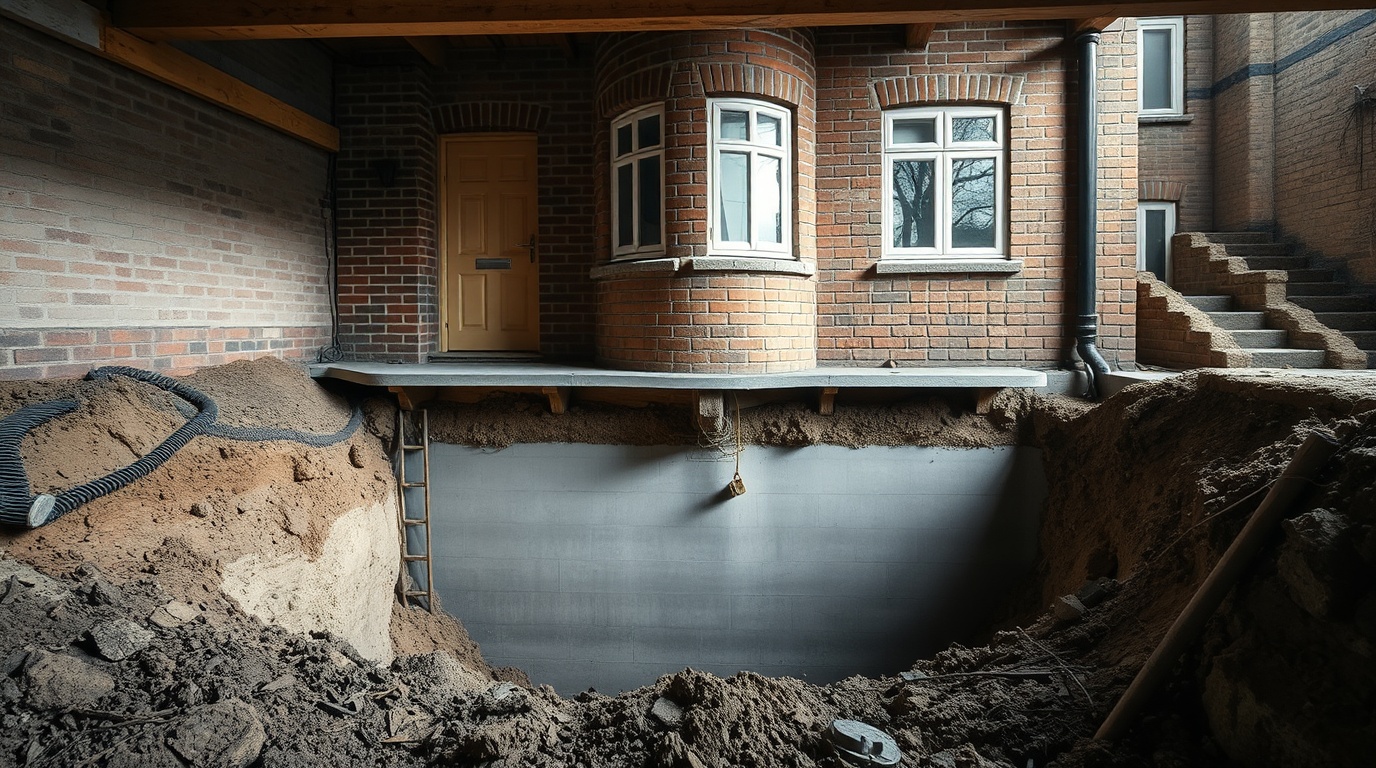
Underpinning a bay window in the UK typically costs around £4,000–£12,000, depending on the bay's size, the foundation depth and access. The bay is a relatively short run of wall — often the curved or angled projection at the front of a Victorian or Edwardian house — so at a mass concrete rate of roughly £1,500–£2,500 per metre the structural work is modest, with fixed costs (engineer, Building Control, making good) on top. Bay windows are one of the most common subsidence points precisely because they were often built with shallower, lighter foundations than the main walls, sometimes little more than the brick footing carrying the window, so they settle independently when the ground beneath dries, shrinks or washes out. A structural engineer confirms whether the bay alone needs support and whether the cause — frequently a nearby tree or a leaking gully — must be fixed too.
The bay window is the textbook localised subsidence job, because bays were so often built on minimal foundations. The figures below are typical UK ranges for guidance, not quotations.
Typical UK costs
- Underpin a bay window~£4,000–£12,000
- Mass concrete rate~£1,500–£2,500 / metre
- Why bays moveshallow / light original footings
- Common causesnearby tree, leaking gully
- Plus fixed costsengineer, Building Control, making good
Why bay windows move so often
- Shallow footings: period bays were frequently built on lighter, shallower foundations than the main house walls, so they are quick to react to ground movement.
- Independent settlement: because the bay is structurally a projection, it can drop or rotate separately from the wall behind it, opening a tell-tale crack at the junction.
- Water nearby: a leaking rainwater gully or drain at the front of the house, or a tree in the front garden, often dries or washes out the ground under the bay.
- Localised fix: the bay alone usually needs support, not the whole front, which keeps the cost down.
| Element | Typical figure |
|---|---|
| Structural work (bay, mass concrete) | £3,000–£9,000 |
| Structural engineer | from a few hundred £ |
| Building Control | local authority / approved inspector fee |
| Making good + cause repair | varies (tree / drain works) |
Indicative UK figures for guidance. Sources: Checkatrade underpinning cost guide and RICS subsidence guidance.
Diagnose before you dig
A cracked bay does not always need underpinning. A structural engineer establishes whether the movement is active subsidence or old, stable settlement that simply needs repair, and whether the cause is a tree, a leaking gully or shrinkable clay. Where it is active subsidence and you hold buildings insurance, it may fall within a subsidence claim, so the insurer manages and largely funds the work bar your excess — another reason to report it before commissioning private work. If underpinning is confirmed, it is usually a contained, single-feature job, but fixing the underlying cause — pruning or removing a tree on advice, or repairing the gully — is part of making the repair durable.
Spotting bay subsidence versus normal cracking
Not every crack around a bay window is subsidence, and telling the difference is what the structural engineer is for. A classic subsidence pattern on a bay is a crack that is wider at the top than the bottom, often running diagonally and following the junction where the bay meets the main wall, sometimes with the bay visibly rotating away or dropping. By contrast, fine cracks that have not changed for years, hairline cracks around new plaster, or cracks that open and close with the seasons are more likely thermal movement or old, stable settlement needing only cosmetic repair. The engineer uses crack monitoring to establish whether the movement is active before recommending anything as significant as underpinning. This matters financially: misreading stable settlement as active subsidence can lead to thousands of pounds of unnecessary foundation work on a bay that was never going anywhere.
| Sign | More likely |
|---|---|
| Crack wider at top, bay rotating | active subsidence |
| Diagonal crack at bay/wall junction | active movement |
| Hairline, unchanged for years | old, stable settlement |
| Opens/closes with seasons only | thermal movement |
General UK guidance. Source: RICS subsidence guidance and engineering practice.
The work, the cause and signing off
If a bay genuinely needs underpinning, the work follows the standard sequenced-bay method around the projection, supporting the bay's foundation down to firmer ground. Because bays are at the front of the house, the cause is often close by: a leaking rainwater gully or front drain, or a tree in the front garden drying shrinkable clay. Fixing that cause — repairing the gully, or managing the tree on the engineer's advice (mindful of heave risk on clay) — is part of a durable repair, not an optional extra. The work is notifiable to Building Control, and where the bay sits on or near a party wall the Party Wall etc. Act 1996 may apply. If it is a confirmed subsidence claim, report it to your insurer first so the work is managed and largely funded bar your excess, and keep the engineer's completion certificate for the future.
For homeowners, the bay window is also a reminder that the cause matters as much as the cure. Because bays sit at the front of the house, the trigger is frequently something close and fixable — a cracked rainwater gully discharging into the ground beside the bay, a blocked or leaking front drain, or a tree in the front garden drawing moisture from shrinkable clay. Underpinning the bay while leaving that cause in place risks the same movement returning, which is why an honest scheme deals with both together. It is equally a reminder not to assume the worst from a single crack: many bay cracks are old, stable settlement that has not moved in years and needs only repointing and redecoration. A short period of crack monitoring by the structural engineer settles whether the movement is active before anyone commits to excavation, and that small investment can save the cost of underpinning a bay that was never going anywhere.
The bay window is also a reminder that the cause matters as much as the cure, because bays sit at the front of the house where the usual triggers are close and fixable. A cracked rainwater gully discharging into the ground beside the bay, a blocked or leaking front drain, or a tree in the front garden drawing moisture from shrinkable clay will keep the same movement returning if the foundation is underpinned but the cause is left in place. An honest scheme deals with both together. It is equally a reminder not to assume the worst from a single crack: many bay cracks are old, stable settlement that has not moved in years and needs only repointing and redecoration. A short period of crack monitoring by the structural engineer settles whether the movement is active before anyone commits to excavation, and that small investment can save the cost of underpinning a bay that was never going anywhere. So the right first step on a cracked bay is diagnosis, not digging — establish whether the movement is live, identify the gully, drain or tree behind it, and only then decide whether the bay genuinely needs support or simply needs the cause fixed and the cracks made good.
Frequently asked questions
Why do bay windows suffer subsidence?
Bays on period houses were often built with shallower, lighter foundations than the main walls, so they react quickly to ground movement and can settle independently. A nearby tree or a leaking gully at the front of the house is a frequent trigger.
Is underpinning a bay window expensive?
It is usually one of the more contained underpinning jobs, around £4,000–£12,000, because the bay is a short run of wall. Fixed costs for the engineer, Building Control and making good are added to the per-metre structural work.
Does a cracked bay window always need underpinning?
No. Many cracks are old, stable settlement needing only repair. A structural engineer determines whether the movement is active subsidence requiring underpinning, and whether a tree or drain is the cause that must also be addressed.
Sources & further reading
Figures on this page are typical UK ranges drawn from published sources and depend on your specific property. They are guidance, not a quotation.