The short answer
Traditional mass-concrete underpinning typically costs around £1,000–£2,000 per linear metre of affected wall in the UK, and roughly £1,200–£2,500 per square metre of foundation worked. By method, mass concrete is usually the lowest-priced option, with beam-and-base around £2,000 per m² and mini-piling nearer £2,600 per m² because they suit deeper or more difficult ground. Less disruptive resin injection sits around £1,200 per m² where it is suitable. Per-metre figures are useful for sizing a job, but the real cost depends on depth and ground conditions, so treat them as a guide rather than a quote.
Per-metre pricing helps you sanity-check a quote, but underpinning is rarely a flat rate down the wall — depth and method change everything. The figures below are typical UK ranges for guidance.
Typical per-metre figures
- Mass concrete~£1,000–£2,000 / linear metre
- Mass concrete~£1,200–£2,500 / m²
- Beam & base~£2,000 / m²
- Mini-piling~£2,600 / m²
- Resin injection~£1,200 / m²
How the methods compare per metre
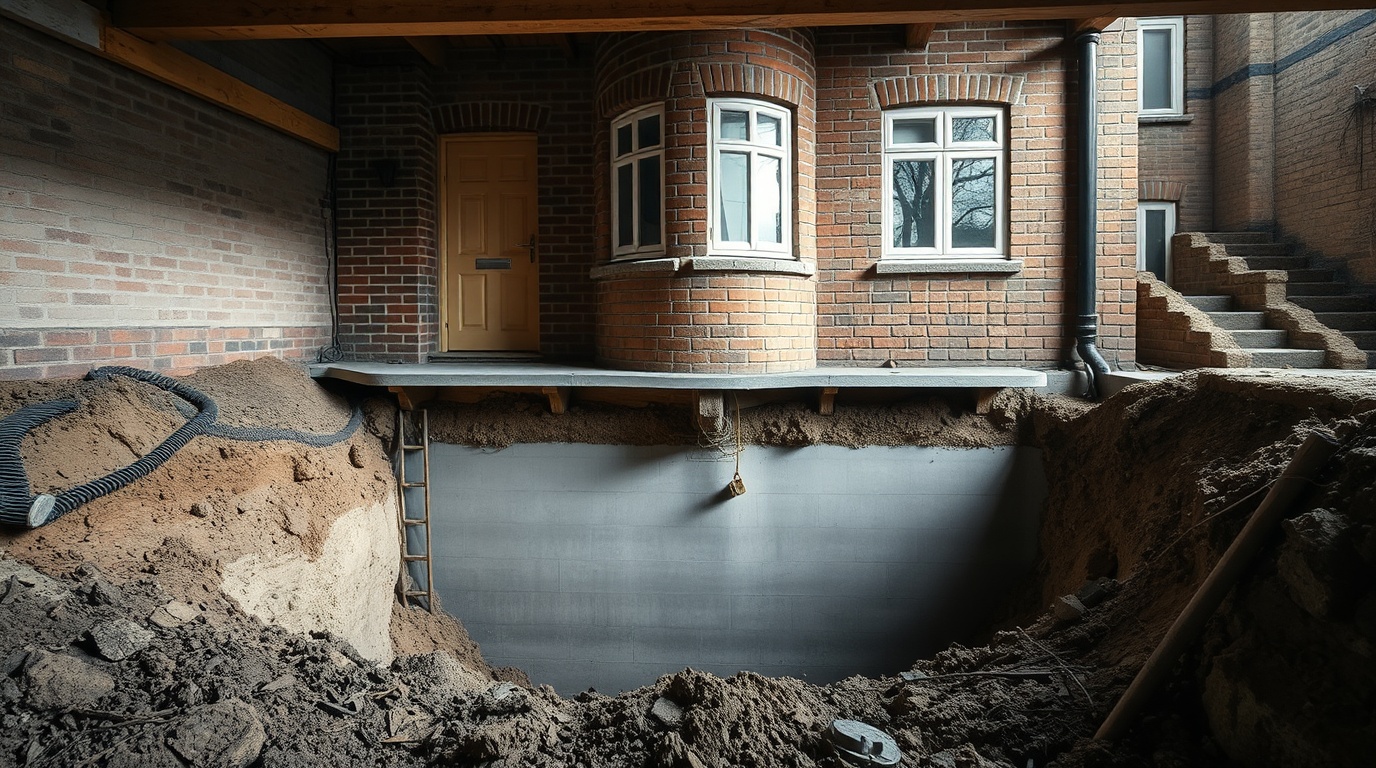
Mass concrete — digging out and filling sections of foundation in sequence — is the traditional method and usually the lowest-priced per metre, but it is labour-intensive and disruptive. Beam and base spreads load onto a reinforced beam and is common where the ground varies. Mini-piling drives piles deep to reach stable ground and suits restricted access or deep movement, which is why it costs more per square metre. Resin injection is the least disruptive — resin is injected to stabilise the soil — and is priced competitively where the ground and cause make it suitable.
| Method | Typical per-m² figure | When it's used |
|---|---|---|
| Mass concrete | ~£1,200–£2,500 / m² | standard, shallow-to-moderate depth |
| Beam & base | ~£2,000 / m² | variable ground, spreads load |
| Mini-piling | ~£2,600 / m² | deep movement, restricted access |
| Resin injection | ~£1,200 / m² | suitable soils, less disruption |
Indicative UK figures for guidance — the method must be chosen by a structural engineer for your ground. Sources: Checkatrade and MyJobQuote.
How to read a per-metre quote
A per-metre rate is only meaningful alongside the length of wall, the depth, and the method. London and the South East tend to carry premium rates — mass-concrete work there can sit nearer £1,800 per m². When you compare quotes, make sure they are pricing the same affected length and the same method, and that the structural engineer's fees and building control are accounted for. A low headline rate that covers a shorter run, or excludes the engineer, is not the saving it looks like.
Frequently asked questions
How much does underpinning cost per metre?
Traditional mass-concrete underpinning typically costs around £1,000–£2,000 per linear metre of affected wall, or roughly £1,200–£2,500 per square metre. The exact figure depends on depth, ground conditions and access.
Which underpinning method is the lowest-priced per metre?
Mass concrete is usually the lowest-priced per metre, with beam-and-base around £2,000 per m² and mini-piling nearer £2,600 per m² because they suit deeper or more difficult ground. The method must suit your ground, so it is chosen by a structural engineer, not on price alone.
Why does London cost more per metre?
London and the South East tend to carry premium rates — mass-concrete work there can sit nearer £1,800 per m² — reflecting higher labour costs and, often, deeper or more constrained sites.
Sources & further reading
Figures on this page are typical UK ranges drawn from published sources and depend on your specific property. They are guidance, not a quotation.