The short answer
To make a subsidence claim, contact your buildings insurer as soon as you notice the warning signs and let them lead the investigation — do not commission your own underpinning first, as unauthorised work can void cover. The insurer appoints a loss adjuster and usually a structural engineer, who inspect the property, open trial pits, survey the drains and often fit crack monitors. A monitoring period of several months to a year is common, because insurers must confirm the cause and whether movement is ongoing before agreeing a repair scheme. You pay the subsidence excess (typically around £1,000); the insurer funds the agreed repairs. When works finish, the insurer's engineer should issue a Certificate of Structural Adequacy. Throughout, keep dated photos and written records, and use the insurer's complaints process and the Financial Ombudsman Service if you disagree with a decision.
Subsidence claims move more slowly than most home insurance claims because the cause has to be proven, not just the damage. The steps below set out the process in order, so you know what to expect and what is expected of you.
Claim at a glance
- First stepCall your buildings insurer
- Who investigatesLoss adjuster + engineer
- Monitoring periodMonths up to ~1 year
- You paySubsidence excess (~£1,000)
- End documentCertificate of Structural Adequacy
Step by step: from report to repair
- Report it promptly. Telephone your buildings insurer as soon as you suspect subsidence (diagonal cracks wider than about 3mm, sticking doors, rippling wallpaper). Early reporting protects your cover.
- Do not start work yourself. Carrying out your own underpinning or repairs before the insurer agrees the cause can reduce or invalidate the claim.
- The insurer appoints specialists. A loss adjuster manages the claim and a structural engineer investigates the cause through trial pits, drain surveys and soil analysis.
- Monitoring. Crack gauges or precise level monitoring track whether movement continues, usually over several months to a year.
- Repair scheme agreed. The engineer specifies the least-cost lasting fix — often drain repair or tree management, and underpinning only where needed.
- Works and reinstatement. Approved contractors carry out the repair and make good the damage.
- Certificate issued. The insurer's engineer signs a Certificate of Structural Adequacy confirming the building is stable.
What the loss adjuster does
The loss adjuster acts for the insurer, not for you, and manages the claim end to end: confirming cover, instructing the engineer, agreeing the scope and cost of works, and authorising payments. They are your main point of contact, so keep their reference number and a written log of every call. You are entitled to appoint your own loss assessor at your own cost if you want professional representation, though many domestic subsidence claims are handled directly with the adjuster. Be clear about which trees, drains or neighbouring properties may be involved, as shared causes can complicate liability.
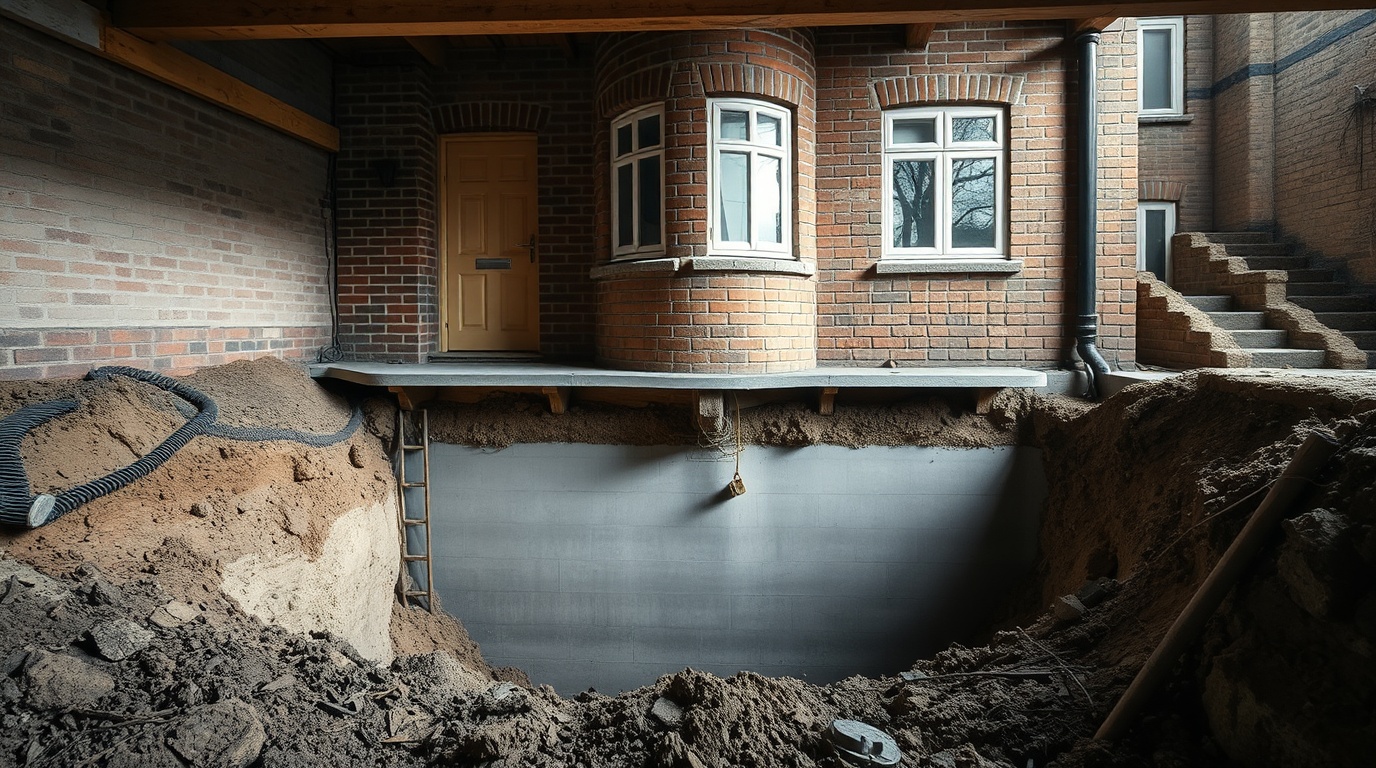
During the investigation, expect the engineer to dig trial pits beside the foundations to see how deep they go and what the ground beneath is made of, to run a CCTV drain survey to check for leaks or breaks, and to fit crack monitoring such as tell-tales or precise level studs. Soil samples may be sent for laboratory analysis to confirm whether the ground is shrinkable clay. Each of these steps is building a picture of cause, and the adjuster uses that evidence to decide both whether the claim is covered and what repair is justified. You should be given access arrangements in advance and, in most cases, copies of the reports on request.
Your responsibilities while the claim runs
A subsidence claim is not entirely passive on your part. You are generally expected to take reasonable steps to prevent further damage — for example reporting a suspected drain leak promptly rather than leaving it — and to keep the property reasonably maintained. You should not commission your own works, but you should cooperate with inspections, provide access, and pass on anything you know about the property's history, nearby trees or past repairs. If you are mid-claim and planning to sell, tell the insurer, because an open subsidence claim affects conveyancing and the buyer's ability to insure.
Keep paying your premium throughout; a claim does not pause the policy, and letting cover lapse mid-claim can cause serious problems. If the damage makes part of the home unusable, ask the adjuster early about alternative accommodation cover, which many buildings policies include where the property genuinely cannot be lived in during works. Most subsidence claims, though, allow you to stay in the home while monitoring and repairs take place.
If you disagree with the insurer
Disputes are common on subsidence claims, usually over the cause, the scope of repair or delays. The route is set out by the FCA: first make a formal complaint to the insurer, who has up to eight weeks to provide a final response. If you remain unhappy, or the eight weeks pass without resolution, you can refer the matter to the Financial Ombudsman Service free of charge, generally within six months of the final response. The Ombudsman can direct the insurer to reconsider, carry out works or pay compensation where it finds the insurer acted unfairly. If you want independent technical support, you may also commission your own structural engineer for a second opinion, which carries weight in a complaint where the dispute is about the cause of the cracking.
What happens at the end of the claim
A subsidence claim does not simply close when the repairs finish. The final step is the issue of a Certificate of Structural Adequacy by the insurer's engineer, confirming that the cause has been addressed and the building is stable. Keep this document permanently, together with the engineer's report, the repair specification and any contractor guarantee. They form the property's structural record, and you will be asked for them when you next insure the home, when you sell it, and by a buyer's surveyor and lender.
Be aware that the claim becomes part of the property's history. Future insurers will ask whether the property has ever suffered subsidence, and you must answer honestly; the address is recorded as having a movement history regardless of who owns it. This usually means a higher premium and a higher subsidence excess at future renewals, though a documented, signed-off repair and a growing period of stability improve the terms over time. Understanding this from the outset helps you keep the right paperwork and set realistic expectations about cover after the claim is settled.
Frequently asked questions
Should I get my own survey before claiming?
It helps to have evidence, but do not commission or start repairs before reporting to your insurer, because unauthorised work can reduce or void the claim. Report first, then the insurer's engineer investigates the cause.
Can I choose my own builder for the repairs?
Insurers usually appoint approved contractors for subsidence repairs so the work is guaranteed and the Certificate of Structural Adequacy can be issued. You can discuss using your own contractor, but the insurer must agree to the arrangement.
What if my claim is taking too long?
Subsidence claims are slow because of the monitoring period, but unreasonable delay can be complained about. Raise a formal complaint with the insurer; if unresolved after eight weeks, you can take it to the Financial Ombudsman Service.
Sources & further reading
- Association of British Insurers — subsidence guidance
- Financial Ombudsman Service — buildings insurance complaints
Figures on this page are typical UK ranges drawn from published sources and depend on your specific property. They are guidance, not a quotation.