The short answer
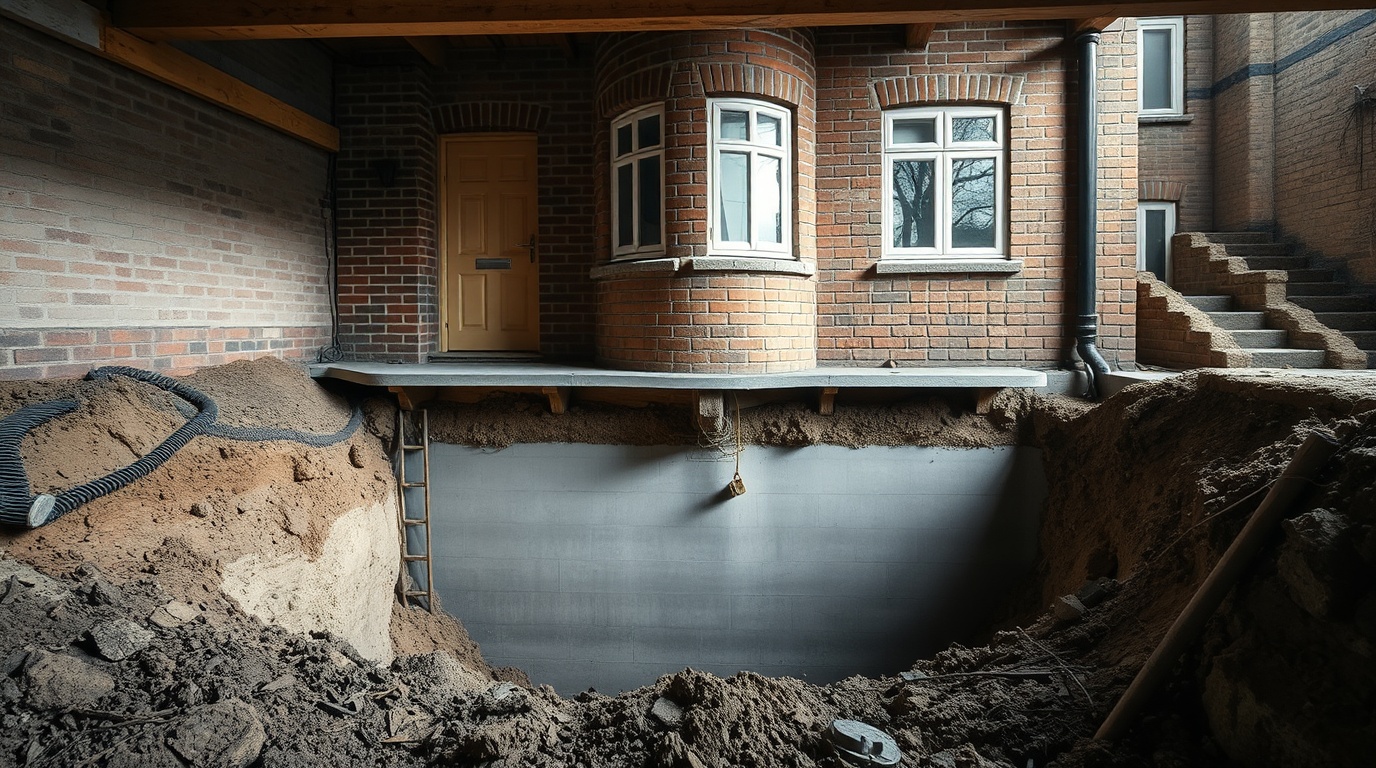
Traditional mass concrete underpinning typically costs around £1,500–£2,500 per metre of wall in the UK, making it usually the lowest-cost underpinning method where the ground allows it. It works by excavating beneath the existing foundation in short, sequenced bays — often about a metre wide and dug in a non-consecutive order so the wall is never unsupported — then filling each bay with mass concrete down to a firmer bearing layer. It suits sites with stable ground at modest depth and reasonable access, because it relies on hand-digging and pouring rather than a piling rig. The per-metre rate rises with foundation depth (more excavation and concrete), restricted access (hand-dig and carry-out spoil), poor soil that may rule the method out, and region, with London and the South East carrying a premium.
Mass concrete is the original underpinning method and still the default where conditions suit. Its per-metre rate is the baseline other methods are compared against. The figures below are typical UK ranges for guidance.
Typical UK costs
- Mass concrete per metre~£1,500–£2,500
- Methodsequenced bays, hand-dug
- Best forstable ground, modest depth
- Deeper foundationspush toward top of range
- RegionLondon / South East premium
How the bay-by-bay method works
- Sequenced bays: the foundation is divided into short sections, dug and filled in a hop-scotch order so no long length is ever unsupported.
- Hand-digging: each bay is excavated below the existing footing to a firmer bearing layer.
- Mass fill: the bay is filled with concrete, allowed to gain strength, and the next bay in the sequence is done.
- No rig: because there is no piling, the method is cheaper where the ground supports it — but slower than continuous trenching because of the sequence.
| Factor | Effect on per-metre rate |
|---|---|
| Foundation depth | deeper = more dig and concrete = higher |
| Access | hand-dig / carry-out spoil = higher |
| Soil | poor ground may rule the method out |
| Region | London / South East premium |
| Run length | longer runs spread fixed costs |
Indicative UK guidance. Sources: Checkatrade underpinning cost guide and structural engineering practice.
When mass concrete is the right choice
Mass concrete is the method a structural engineer specifies when the ground is stable at a reachable depth and the loads are within what a widened, deepened concrete base can carry. It is not suitable where near-surface soil is weak, where stable strata are several metres down, or where a large tree on shrinkable clay dictates a deep foundation — those cases call for beam-and-base or mini-piling at higher rates. Because it is the lowest-cost underpinning route, it is worth confirming with the engineer whether your ground allows it before assuming a more expensive method is needed. As with all underpinning, the work is notifiable and inspected by Building Control.
Why the sequence makes it slow
The defining characteristic of mass concrete underpinning is that it cannot be dug as one continuous trench, because removing the ground under a long length of wall all at once would leave it unsupported. Instead the foundation is divided into short bays, typically around a metre wide, and these are excavated and filled in a deliberate non-consecutive sequence — for example bays 1, 4 and 7 first, then 2, 5 and 8, and so on — so that no two adjacent bays are ever open at the same time. Each bay must be dug below the existing footing, filled with mass concrete, and left to gain strength before the bays beside it are tackled. There is also usually a gap left at the top of each pour, later dry-packed with a stiff mortar to pin the new concrete tight to the underside of the old foundation. This careful, staged process is why even a modest mass concrete job takes weeks, and why the labour content is high relative to the materials.
| Step | Why it matters |
|---|---|
| Bays ~1 m wide | keeps wall supported |
| Non-consecutive sequence | no adjacent bays open at once |
| Concrete gains strength | before neighbouring bays dug |
| Dry-packing the top | pins new concrete to old footing |
General UK guidance. Source: structural engineering practice.
Cost drivers and getting a fair quote
Within the £1,500–£2,500 band, the rate is set mostly by depth and access. A shallow foundation reached easily from outside with a mini-digger sits near the bottom of the range; a deeper foundation that must be hand-dug from a confined rear garden, with spoil barrowed out, sits near the top. Add the fixed costs common to all underpinning — the structural engineer, Building Control fees, any Party Wall surveyors, and making good — and the realistic total takes shape. When comparing quotes, make sure each contractor is pricing the same scope and depth and including the same items, because a lower per-metre figure that assumes a shallower foundation or excludes reinstatement is not genuinely lower. Where the work is a confirmed subsidence claim, the insurer's appointed contractor handles much of this, and your cost is largely limited to the excess.
For homeowners weighing quotes, it helps to know that mass concrete's apparent simplicity hides a fair amount of skill. Judging when a bay has gained enough strength to open the next, getting the dry-packing tight enough to transfer load properly, and keeping the sequence right so the wall is never undermined are all matters of experience, not just labour. That is why the method, despite using ordinary materials, is not a job for a general builder without underpinning expertise. The per-metre rate you are quoted should reflect a contractor who understands the sequencing and works to the engineer's design and Building Control's inspections, not simply the lowest number for moving earth and pouring concrete. Where the ground genuinely suits it, mass concrete remains the most economical way to support a foundation, but the economy comes from the ground being right for the method, not from cutting corners on how carefully the bays are dug and filled.
It is easy to look at mass concrete — dig a pit, fill it with concrete — and assume the per-metre rate is mostly materials, but the cost actually lives in the method, and that is where corners get cut on the cheaper quotes. The work has to be done in short, alternating sections, typically around a metre wide, so that the wall is never left unsupported over a long open trench; each bay is excavated, concreted and left to gain strength before the adjacent one is opened. At the top of each pour, the gap between the new concrete and the underside of the existing footing is closed with a stiff dry-pack mortar rammed home so the load actually transfers — skip or rush that step and the underpinning does not do its job. None of this is visible once the trench is backfilled, which is exactly why an unusually low mass-concrete rate is a warning sign rather than a bargain: the saving usually comes from longer, riskier bays or a hurried dry-pack. The skill being paid for is the patient sequencing and the proper load transfer, and that is what a sound per-metre rate reflects.
Frequently asked questions
Is mass concrete the lowest-cost underpinning method?
It is usually the lowest-cost method, at around £1,500–£2,500 per metre, where the ground is stable at modest depth. Poor or deep ground rules it out and pushes you toward beam-and-base or piled methods at higher rates.
How are the bays dug in mass concrete underpinning?
In short sections in a non-consecutive sequence, so the wall is never left unsupported. Each bay is excavated below the existing footing, filled with concrete and left to gain strength before the next bay in the order is dug.
What makes mass concrete underpinning more expensive per metre?
Greater foundation depth, restricted access that forces hand-digging and spoil carry-out, and regional premiums in London and the South East. Poor soil can rule the method out entirely, requiring a more expensive alternative.
Sources & further reading
- Checkatrade — underpinning cost guide
- RICS — subsidence and foundations guidance
- Planning Portal — Building Regulations: structure
Figures on this page are typical UK ranges drawn from published sources and depend on your specific property. They are guidance, not a quotation.