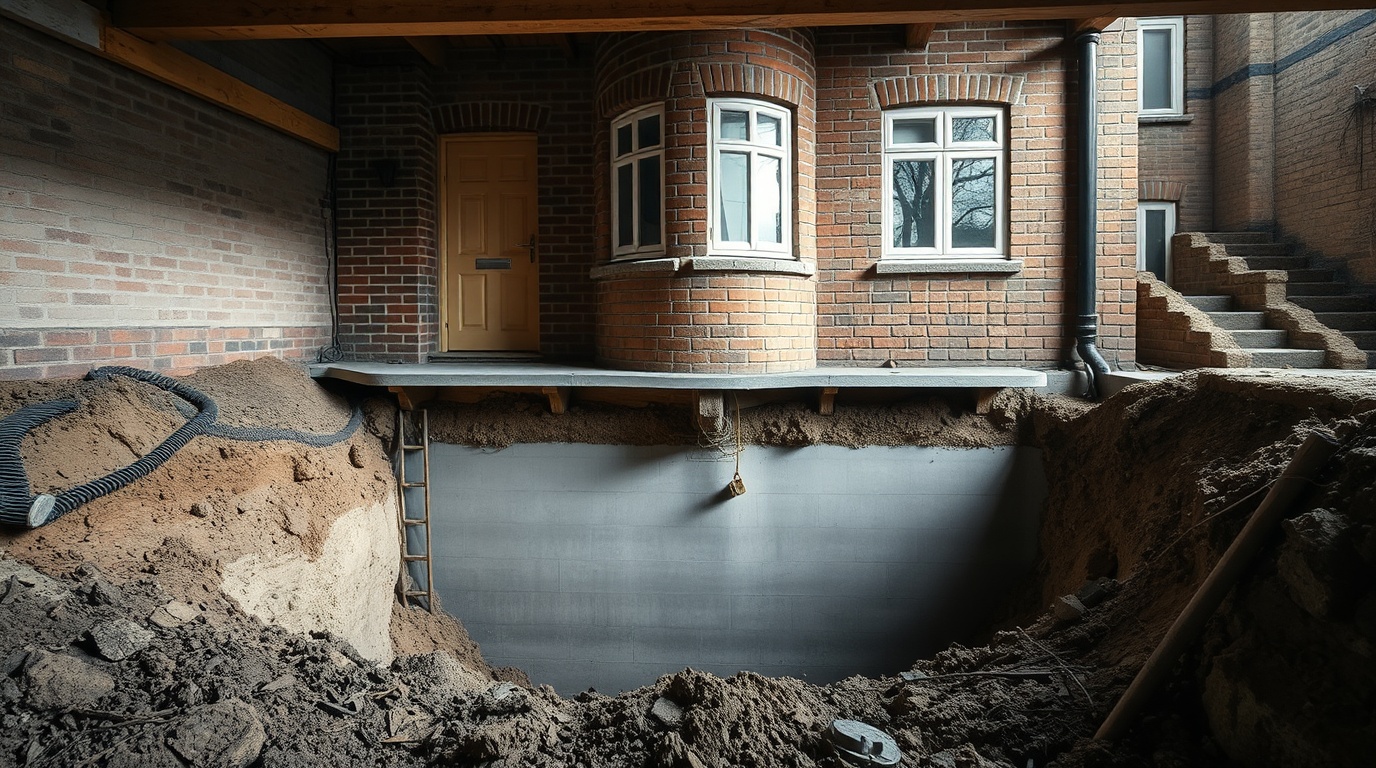
The short answer
Buying an underpinned house can be a perfectly sound decision, provided you confirm the work was done properly, the property has been stable since, and you can both mortgage and insure it. Underpinning that successfully fixed a past problem can mean the foundations are now stronger than an equivalent un-underpinned home. Before committing, insist on the Certificate of Structural Adequacy, building-control sign-off, guarantees and the full subsidence/insurance history; commission a RICS Level 3 (Building) Survey or a structural engineer's inspection; and confirm in advance that a mortgage and buildings insurance are available, ideally by taking on the seller's existing insurer. Walk away only if the documentation is missing, there is evidence of ongoing movement, or you cannot arrange lending or cover. A well-documented, long-stable underpinned home can also be a value opportunity.
An underpinned house is not something to avoid on principle, but it does demand more due diligence than a standard purchase. The sections below give a practical buyer's checklist, the professionals to involve, and the warning signs that should give you pause.
Buyer's checklist
- DemandCertificate of Structural Adequacy
- CommissionRICS Level 3 Building Survey
- Confirm earlyMortgage availability
- Confirm earlyBuildings insurance
- Walk away ifOngoing movement or no documents
The documents to insist on
Your first job as a buyer is to see the paperwork that proves the underpinning was done correctly and the problem resolved. Ask the seller, through your solicitor, for:
- Certificate of Structural Adequacy — the engineer's confirmation that the underpinning remedied the movement.
- Building-control completion certificate — proof the work was approved under the Building Regulations.
- Contractor guarantees or warranties — ideally transferable to you, the new owner.
- Insurance and claims history — showing how the original subsidence was handled and that the home has stayed insurable.
- Engineer's reports and monitoring records — evidence the structure was confirmed stable after the work.
If these cannot be produced, treat that as a significant concern rather than a paperwork inconvenience.
The checks to make
Documents tell you the history; surveys and enquiries tell you the present:
| Check | Who does it | What it confirms |
|---|---|---|
| Building survey | RICS surveyor | Current condition; any active movement |
| Structural inspection | Structural engineer | Foundations now adequate & stable |
| Mortgage decision | Lender / broker | The property is lendable |
| Insurance quote | Insurer / broker | Cover is available and affordable |
| Conveyancing enquiries | Your solicitor | Documents, guarantees, disclosures |
Indicative due-diligence steps for buying an underpinned property.
The questions to ask the seller and agent
Before instructing a survey or solicitor, a few direct questions will tell you a lot about whether a purchase is worth pursuing:
- When was the underpinning done, and why? The cause and date frame everything else.
- What was the original cause, and how was it removed? A repaired drain or managed tree is reassuring; an unaddressed cause is a warning.
- Do you have the Certificate of Structural Adequacy and building-control sign-off? If not, ask why.
- Has the property moved at all since the works? Stability since completion is the key reassurance.
- Is it currently insured, and can the policy transfer to me? Continuous cover and a transferable policy smooth both insurance and mortgage.
Honest, documented answers should give you confidence to proceed to the formal checks. Vague answers, missing paperwork or evasiveness about past movement are reasons to be cautious before spending money on a survey and searches.
When to proceed and when to walk away
Proceed with reasonable confidence when the documentation is complete, a building survey and (where advised) a structural engineer confirm the property is stable with no active movement, and you have secured both a mortgage offer and a buildings insurance quote. In that scenario you may even negotiate a fair reduction reflecting the history, making the home a sensible buy. Be far more cautious — and prepared to walk away — if the seller cannot produce the structural documents, if a survey finds signs of continuing movement, if no mainstream lender will lend and only specialist finance is possible at poor terms, or if buildings insurance proves genuinely difficult to arrange. These are the situations where the underlying problem may not be fully resolved or where the property will be hard to resell later. The deciding question is simple: is there clear evidence the cause was fixed and the home has been stable since? If yes, an underpinned house is often a sound and sometimes shrewd purchase.
Frequently asked questions
Is an underpinned house a bad investment?
Not inherently. A well-documented, long-stable underpinned home can be a sound purchase and sometimes offers value, since the foundations may now be stronger than a comparable property. The risk lies in buying one with missing paperwork or unresolved movement, which is why thorough checks matter before committing.
What survey should I get on an underpinned house?
A RICS Level 3 (Building) Survey is the most thorough standard survey and is recommended for underpinned or older properties. Depending on what it finds, the surveyor may advise a further inspection by a structural engineer to confirm the foundations are now adequate and the property is stable.
Will I be able to sell an underpinned house later?
Yes, provided you keep the documentation and the property remains stable and insured. The same pack you relied on when buying — certificate, guarantees, building-control sign-off and insurance history — is what you will pass to your own buyer, so look after it from day one.
Sources & further reading
Figures on this page are typical UK ranges drawn from published sources and depend on your specific property. They are guidance, not a quotation.