The short answer
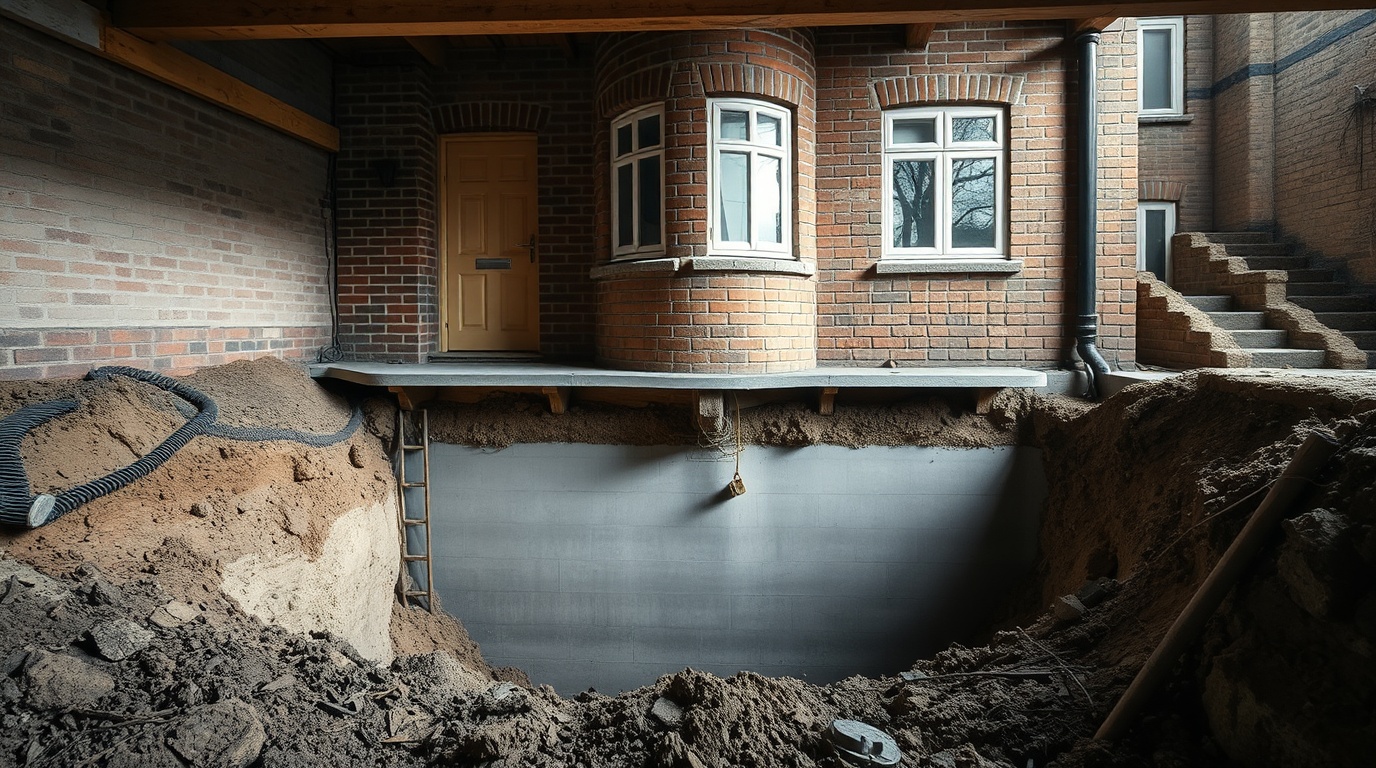
Underpinning is expensive because it is slow, labour-intensive structural work done by hand in carefully sequenced sections, plus a stack of professional and statutory costs around it. The foundation is excavated in short alternating bays — typically about a metre at a time — so the wall is never left unsupported, which means a lot of careful hand-digging, temporary support, and waiting for concrete to cure before the next bay. On top of the build you pay for a structural engineer to diagnose the movement and design the scheme, Building Control fees and inspections, often a Party Wall Act 1996 surveyor, and frequently the cost of fixing the cause — a leaking drain, a tree, or poor ground. Spoil removal, restricted access and reinstating floors, drives and decoration afterwards add still more. None of it is optional, which is why a domestic job commonly runs £10,000–£35,000.
The headline figure is not just for concrete. It reflects slow structural work plus the engineering, legal and remedial costs that surround it. Here is where the money goes.
Where the cost sits
- Hand-dig in sequenced bayslabour-heavy, slow
- Concrete, steel & temporary supportmaterials and curing time
- Structural engineerdiagnosis, design, supervision
- Building Control + Party Wallstatutory fees and surveyors
- Fixing the cause + making gooddrains, trees, reinstatement
The reasons it costs so much
- Sequenced excavation: the foundation is dug and filled in short alternating bays so the building is always supported, which is far slower than a continuous trench.
- Hand-digging: on confined or restricted sites the work is done by hand, with spoil carried out rather than machine-dug.
- Materials and curing: mass concrete, and steel where beams or piles are used, plus the wait for each section to gain strength before moving on.
- Professional fees: a structural engineer must diagnose the movement and design the scheme, and may supervise it.
- Statutory costs: Building Control fees and inspections, and Party Wall surveyors where neighbours are involved.
- Fixing the cause and reinstatement: a leaking drain or tree must be dealt with, and floors, drives and decoration made good afterwards.
Ways the cost is contained
The total can be kept proportionate by doing only what the structural engineer specifies. Many movements are resolved with localised repair, drainage works or tree management plus monitoring rather than full underpinning, and where underpinning is needed it is often partial — just the affected length of wall, not the whole perimeter. Where the ground allows, mass concrete avoids the higher cost of piling, and where a property qualifies, an insurer-managed subsidence claim funds most of the work bar the excess. The expensive route is full underpinning of a whole house; the common reality, with good diagnosis, is something more targeted.
| Cost driver | Why it adds up |
|---|---|
| Bay-by-bay digging | slow, keeps wall supported throughout |
| Restricted access | hand-dig and carry-out spoil |
| Engineer + Building Control | design, inspection, compliance |
| Party Wall surveyors | shared/adjoining structures |
| Fixing root cause | drains, trees, ground |
General UK guidance. Sources: Checkatrade cost guide and RICS subsidence guidance.
The hidden costs people forget
When homeowners compare a contractor's price against what they imagined, the gap is usually the work that surrounds the digging. Investigation comes first — crack monitoring over weeks or months, a soil investigation, and a drains survey to pin down the cause — and that is real cost before a single bay is dug. Then there is fixing the cause: a failed drain has to be repaired, a tree managed or removed (carefully, to avoid heave on clay), or poor ground addressed, because underpinning a wall while leaving the thing that undermined it is pointless. Spoil removal from beneath the foundation, often by skip or grab lorry, adds up. And once the structural work is done, making good reinstates the floors, paths, drives, patios and decoration the excavation disturbed. Each of these is easy to overlook in a headline figure but unavoidable in the real total, which is why honest quotes for similar scope tend to land in a similar range.
Spending wisely, not just less
The goal is not to find the lowest number but to pay only for what the structure genuinely needs. That starts with a proper diagnosis: a competent structural engineer frequently establishes that cracking is old, stable settlement or thermal movement needing no foundation work at all, or that fixing a drain and monitoring will resolve active movement without underpinning. Where underpinning is needed, it is usually partial — the affected length only — and where the ground allows, mass concrete avoids the higher cost of piling. If the work qualifies as a subsidence claim, your insurer funds most of it bar the excess. The expensive scenario — full underpinning of an entire house in piled concrete — is rare and is the result of widespread foundation failure, not the default. Paying for good diagnosis up front is the single best way to avoid spending on work you do not need.
There is also a simple economic reason the figures cluster where they do: underpinning is a low-volume, high-risk trade. The contractors who do it competently carry insurance, employ or work alongside structural engineers, and take on the liability of working beneath a standing building, so their overheads are higher than a general builder's. The work cannot be rushed, mechanised away or done with cheaper materials without compromising safety, which limits how low an honest price can go. That is why an unusually cheap quote should prompt questions rather than relief — it often means a shallower foundation has been assumed, the engineer or Building Control fees have been left out, or the reinstatement has been excluded, all of which reappear as extras once the work starts. Understanding that the cost reflects genuine engineering, liability and careful sequencing, rather than padding, is what lets a homeowner judge whether a quote is fair for the scope rather than simply high.
Underpinning is one of the few domestic trades where an unusually low quote should worry you rather than tempt you. The work is low-volume, high-consequence groundwork: it is sequenced by hand in short sections to avoid undermining the wall, it carries real structural risk if rushed or skimped, and it must satisfy a structural engineer's design and Building Control inspection at every stage. A contractor pricing it properly is paying for skilled labour, engineering input, insurance, spoil removal, the statutory layer and the slow, careful method itself — none of which a genuinely low figure can absorb. So a quote that comes in dramatically under the others usually signals one of three things: a different and lesser scope, the omission of the engineer or Building Control fees, or a method that cuts the safe sequence short. The reliable way to compare is to fix one written specification — the same metres, the same method, the same inclusions — and price that identical scope across each contractor, rather than comparing headline numbers that may describe different work. With underpinning, the value is in the care and the competence, and those are precisely the things that cannot be bought at a discount without buying a worse outcome.
| Decision | Effect on cost |
|---|---|
| Proper diagnosis first | may avoid underpinning entirely |
| Partial vs full | support only the affected length |
| Mass concrete where ground allows | lower than piling |
| Insurance claim where it qualifies | insurer funds most, bar excess |
General UK guidance. Sources: RICS subsidence guidance and ABI subsidence guidance.
Frequently asked questions
Is underpinning always necessary for subsidence?
No. Many subsidence cases are resolved by fixing the cause — a leaking drain or a tree — and monitoring, with localised repair rather than full underpinning. A structural engineer decides whether underpinning is genuinely required.
Can I reduce the cost of underpinning?
Costs are contained by underpinning only the affected length of wall, using mass concrete where the ground allows rather than piling, and, where it qualifies, claiming through buildings insurance so the insurer funds most of the work. The method must still be what the engineer specifies.
Why do underpinning quotes vary so much?
Because scope varies — the number of metres, the depth, the method, whether the licence, fees and making good are included, and the cause being fixed. Compare quotes on the same written specification, or a lower figure may simply exclude essential work.
Sources & further reading
- Checkatrade — underpinning cost guide
- RICS — subsidence and your home
- Planning Portal — Building Regulations: structure
Figures on this page are typical UK ranges drawn from published sources and depend on your specific property. They are guidance, not a quotation.